
Table of Contents
Introduction
Studying abroad can open doors to international universities, research opportunities, professional networks, and new academic experiences. But for many students, the biggest challenge is not finding a university—it is figuring out how to pay for international education.
Tuition fees, accommodation, living expenses, health insurance, flights, and visa-related costs can make studying overseas expensive. Fortunately, students can use study abroad scholarship platforms to discover scholarships, grants, tuition discounts, and other financial-aid opportunities.
The right platform can help you search by country, study level, field of study, nationality, and funding type. Some are useful for secondary-school students, while others focus heavily on undergraduate, master’s, or PhD opportunities.
In this guide, we explore 15 of the best study abroad scholarship platforms in 2026, explain what each one can help you find, and show you how to use scholarship databases more effectively.
What Are Study Abroad Scholarship Platforms?
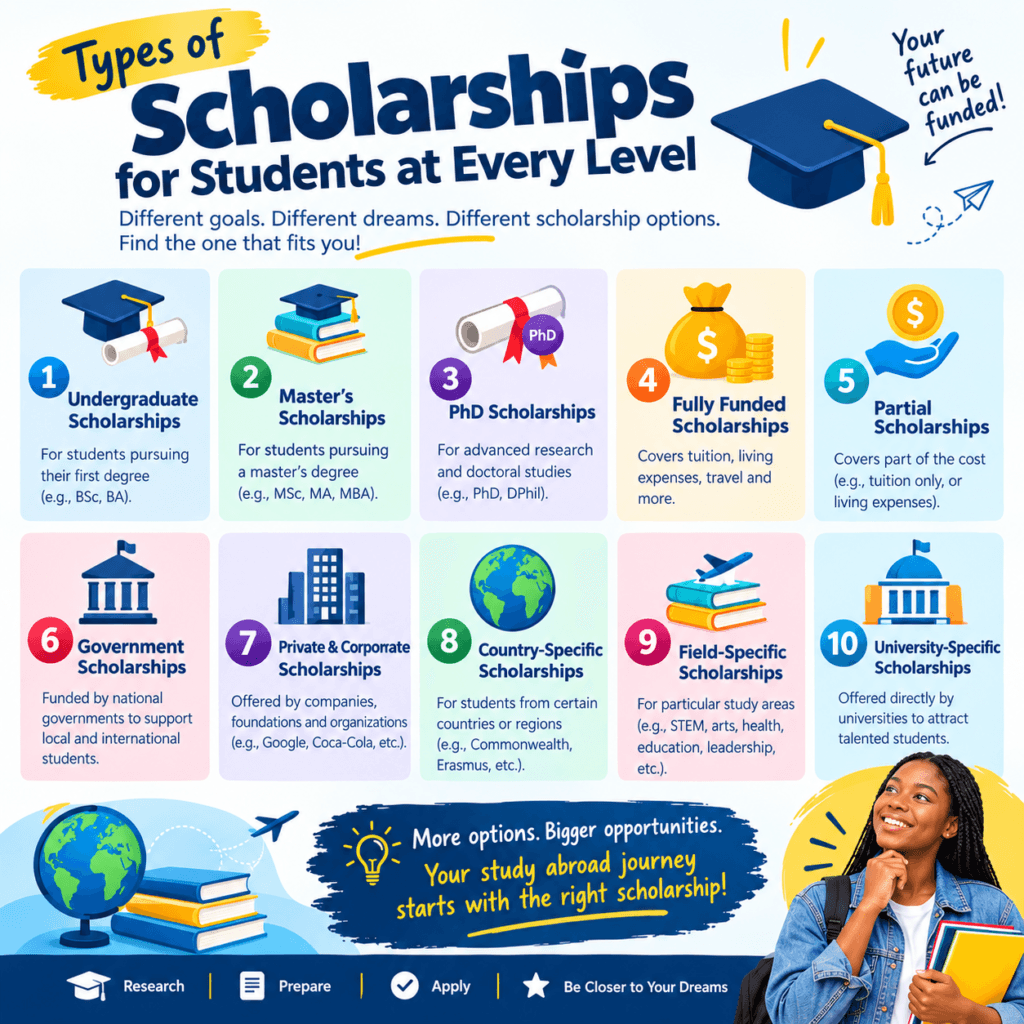
Study abroad scholarship platforms are websites or online databases that help students discover scholarships and financial-aid opportunities for international education.
Depending on the platform, you may be able to search for:
- Undergraduate scholarships
- Master’s scholarships
- PhD scholarships
- Secondary-school or school-level opportunities
- Fully funded scholarships
- Partial scholarships
- Tuition-fee discounts
- Government scholarships
- University scholarships
- Research funding
- Grants and fellowships
Some platforms are primarily scholarship databases, while others combine scholarship searches with university, course, admission, and study-abroad services.
For example, IDP lets students search for scholarships along with courses and universities. Its scholarship database can also be filtered by study level, such as school, undergraduate, postgraduate, and doctorate.
This makes scholarship platforms useful at various points during your study abroad journey.
How to Choose the Right Study Abroad Scholarship Platform
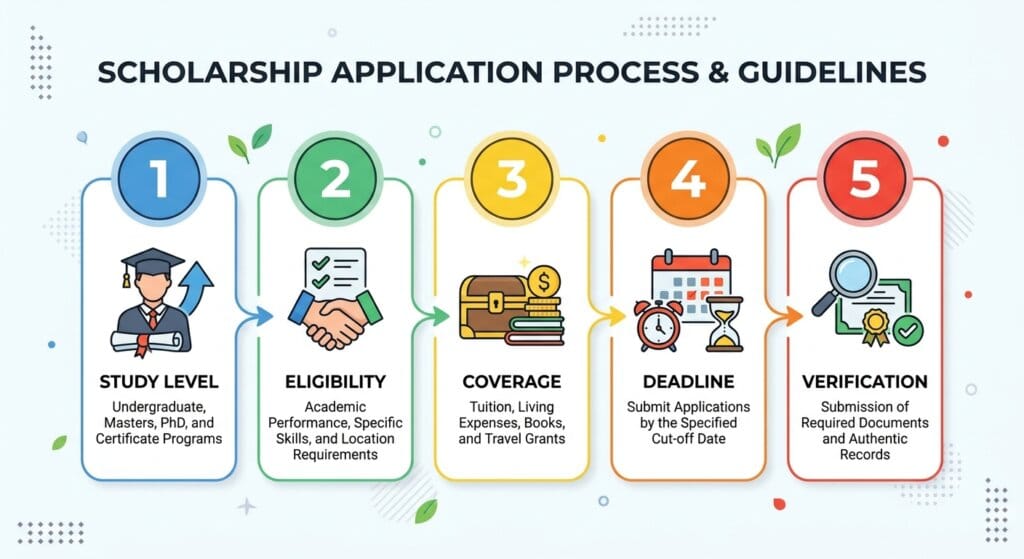
Not every scholarship website works in the same way. Before applying for an opportunity you discover online, consider the following.
1. Check Your Study Level
Start by identifying whether you are looking for:
- Secondary-school scholarships
- Undergraduate scholarships
- Master’s scholarships
- PhD scholarships
- Research fellowships
A scholarship that seems attractive might not accept applicants at your academic level.
2. Check the Eligibility Requirements
Pay attention to requirements such as:
- Nationality
- Academic qualifications
- Age
- Grade or GPA
- Field of study
- English-language requirements
- Country of residence
- Previous degrees
- Work or research experience
Never assume that an international scholarship is automatically available to every international student.
Thus, since GPA and academic performance are common eligibility factors, strengthening your study habits early can make a real difference—see our guide to [21 Proven Ways to Improve Your Memory in 2026] for techniques that help with retention and exam performance.
3. Look at What the Scholarship Covers
“Scholarship” doesn’t always cover every study-abroad expense.
A funding opportunity might provide:
- Full tuition
- Partial tuition
- Monthly living allowance
- Accommodation
- Travel expenses
- Health insurance
- Study materials
- Visa-related support
Some awards cover only tuition fees, while others provide a wider financial package.
4. Check the Deadline
Scholarship deadlines can vary considerably.
Some applications open months before the academic year begins, while others have multiple application rounds. Save the deadline as soon as you find an opportunity that matches your profile.
5. Verify the Scholarship
Use scholarship platforms to discover opportunities, but verify important information through the official scholarship provider or university before submitting documents or personal information.
For instance, the Commonwealth Scholarship Commission specifically advises applicants to use its official website and systems and to be wary of third-party sites asking for personal information.
15 Best Study Abroad Scholarship Platforms in 2026
1. InternationalScholarships
The InternationalScholarships is a scholarship-search resource that helps students find financial aid opportunities for international education.
Students can use scholarship databases like this to broaden their search beyond scholarships offered directly by a university.
Best for:
- International scholarship searches
- Students researching financial aid
- Finding opportunities outside a single university
Tip
Don’t just look for one type of scholarship. Try using different combinations of your country, study level, subject, and destination when you search.
2. Mastersportal Scholarships
Mastersportal is especially helpful for students looking into master’s degrees abroad and any related scholarship opportunities.
Students planning postgraduate education can use the platform alongside university websites to investigate degree programs, destinations, and funding possibilities.
Best for:
- Master’s students
- Postgraduate study
- Students comparing international programs
- Scholarship and university research
If you’re planning on getting a master’s degree, make sure to compare the scholarship requirements with the program’s admission requirements.
3. TopUniversities Scholarship Resources
TopUniversities is another useful starting point for students researching international universities and scholarship opportunities.
Its scholarship resources can help students learn about different forms of financial support available for studying abroad.
Best for:
- University research
- International students
- Scholarship research
- Students comparing destinations
A useful strategy is to research the university first and then see if they offer institution-specific scholarships for international students.
4. Go Overseas
Go Overseas provides study-abroad information and scholarship resources, including scholarships and grants for different types of international study.
Its 2026 scholarship guide includes opportunities and information organized by areas like undergraduate scholarships, graduate scholarships, destinations, and scholarship databases.
Best for:
- Study-abroad program research
- Undergraduate students
- Graduate students
- Students comparing destinations
The platform can be especially helpful when you’re still figuring out where and how you want to study abroad.
5. ScholarshipTab
ScholarshipTab is designed for scholarship discovery and can be used by students looking for international funding opportunities.
Best for:
- Scholarship searches
- International students
- Students looking for multiple opportunities
- Students building a scholarship shortlist
When using a scholarship database, avoid applying randomly. Create a shortlist of opportunities that match your academic level, nationality, subject, and destination.
6. IEFA — International Education Financial Aid
The International Education Financial Aid resource is another option for students searching for financial assistance for international education.
Best for:
- International students
- Financial-aid research
- Students looking for scholarships and funding
- Students comparing international education costs
When comparing financial-aid opportunities, look beyond the headline scholarship amount. Consider tuition, accommodation, transportation, insurance, and living expenses.
7. IDP Education
IDP is particularly useful because its study-abroad services combine research on universities, courses, scholarships, and applications.
Its scholarship search allows students to browse opportunities by study level, including school, foundation, undergraduate, postgraduate, and doctorate.
IDP says its scholarship search includes thousands of opportunities from hundreds of institutions, while its broader platform also supports course searches and applications.
Best for:
- Secondary-school students
- Undergraduate students
- Postgraduate students
- Doctoral students
- International university research
- Students considering Australia, Canada, Ireland, New Zealand, the UK, and the US
For Nigerian students, IDP also provides study-abroad services in Nigeria.
8. ScholarshipPortal
ScholarshipPortal is another useful option for students researching scholarships in Europe and other destinations.
The European Education Area identifies ScholarshipPortal as a database containing scholarship opportunities and says users can select their study level, home country, and destination to find relevant opportunities.
Best for:
- European study opportunities
- International students
- Students comparing scholarship options
- Students searching by study level and destination
If Europe is your target destination, combine scholarship searches with research into individual universities and national funding schemes.
9. DAAD Scholarship Database
Students interested in studying or conducting research in Germany should consider the DAAD scholarship database.
The DAAD explains that its database can be used to search for scholarship and funding opportunities, including those offered by organizations other than DAAD itself.
Best for:
- Students interested in Germany
- Postgraduate students
- Researchers
- PhD students
- Students searching for German funding opportunities
DAAD also notes that German universities can provide their own scholarships, so students should check their target university in addition to the central scholarship database.
10. Erasmus+
Erasmus+ is an important resource for students interested in European study and mobility opportunities.
Its official student information covers study-abroad opportunities at the bachelor’s, master’s, and doctoral levels. Erasmus Mundus Joint Masters also provide scholarship opportunities for participating students.
The wider Erasmus+ program also includes opportunities for school pupils, students, trainees, and other participants.
Best for:
- European study opportunities
- Bachelor’s students
- Master’s students
- Doctoral students
- Students interested in study mobility
When students are thinking about studying in Europe, Erasmus+ should be just one part of their scholarship search, not the only one they rely on.
11. EducationUSA
EducationUSA is a useful resource for international students researching higher education in the United States.
Students can use official U.S. education resources to learn more about universities, admissions, funding, and studying in America.
Best for:
- Students interested in the United States
- International university applicants
- Undergraduate students
- Graduate students
- Students researching U.S. financial-aid options
Always distinguish between university scholarships, external scholarships, and financial aid when researching U.S. study options.
12. Chevening
Chevening is an important scholarship resource for students interested in postgraduate study in the United Kingdom.
Because eligibility and application requirements can change between cycles, applicants should always consult the official Chevening information for the relevant application year.
Best for:
- Master’s applicants
- International students
- Students targeting the UK
- Applicants researching fully funded postgraduate opportunities
Chevening is not a general scholarship database, so think of it as a specific major scholarship program within a wider UK funding search.
13. Commonwealth Scholarship Commission
The Commonwealth Scholarship Commission offers several scholarship and fellowship programs for eligible Commonwealth citizens.
Its programmes include Commonwealth Master’s Scholarships, Shared Scholarships, and PhD Scholarships, among other programs.
Nigeria is listed among eligible countries for relevant Commonwealth programmes, although eligibility varies by individual award.
Best for:
- Master’s students
- PhD students
- Commonwealth-country applicants
- Students targeting UK universities
The CSC emphasizes that applicants should use its official systems and be cautious with third-party sites that ask for personal information.
14. Fulbright
Fulbright is another big name students might come across when looking for funding for international education related to the United States.
Depending on the specific Fulbright program and applicant’s country, opportunities can differ considerably.
Best for:
- International graduate students
- Researchers
- Students interested in U.S. study
- Academic and cultural exchange opportunities
Because Fulbright programs vary by country, always check the official program information applicable to your nationality.
15. Official University Scholarship Portals
Don’t overlook one of the most important scholarship sources: the university itself.
Many universities publish scholarships specifically for international students on their official websites.
You can often find opportunities by searching a university’s:
- International student office
- Financial-aid department
- Graduate school
- Faculty or department
- Scholarship office
- Admissions website
The European Education Area also recommends checking individual universities because institutions can offer their own scholarships and financial support.
Best for:
- University-specific scholarships
- International students
- Undergraduate applicants
- Master’s applicants
- PhD applicants
- Department-specific funding
This is especially important for postgraduate and PhD students because some funding opportunities are connected directly to particular departments, research projects, supervisors, or programs.
Best Study Abroad Scholarship Platforms by Study Level
Not every scholarship platform is equally useful for every student. Your academic level should influence where you search.
Best Scholarship Platforms for Secondary School Students
Secondary school students should look for opportunities specifically designed for them, like exchanges, summer programs, or pre-university education.
Erasmus+ is one example of a program that includes opportunities for school pupils, although eligibility depends on the specific activity and participating institution.
Students should also investigate:
- School exchange programs
- University pre-college programs
- Government-sponsored opportunities
- International competitions
- Foundation programs
- Scholarships offered directly by schools
Parents and schools should verify eligibility and application requirements before submitting an application.
Best Scholarship Platforms for Undergraduate Students
Undergraduate students have access to a wide range of scholarship categories.
Search for:
- Bachelor’s scholarships
- Merit scholarships
- Need-based financial aid
- Tuition discounts
- Government scholarships
- University scholarships
- Country-specific scholarships
Platforms such as IDP, Go Overseas, InternationalScholarships, and university scholarship portals can be useful starting points.
Best Scholarship Platforms for Master’s Students
Master’s students have access to many international scholarship and funding opportunities.
Important resources include:
- Erasmus Mundus
- Commonwealth Scholarships
- DAAD
- Chevening
- University scholarship portals
- Scholarship databases
For example, the Commonwealth Scholarship Commission offers master’s programs for eligible candidates from low- and middle-income Commonwealth countries.
Best Scholarship Platforms for PhD Students
PhD students should approach scholarship searching slightly differently.
Instead of searching only for the word “scholarship,” also search for:
- PhD funding
- Doctoral scholarships
- Research grants
- Doctoral fellowships
- Research assistantships
- Graduate funding
- Fully funded PhD programs
The Commonwealth Scholarship Commission offers PhD opportunities under specific eligibility categories, while European resources also point students toward EURAXESS for research and doctoral funding information.
For a PhD, the university department and prospective supervisor can be just as important as a general scholarship database.
Best Study Abroad Scholarship Platforms for Nigerian Students
Nigerian students can search many of the international platforms mentioned above, but it’s important to check nationality eligibility carefully.
Useful starting points include:
- IDP Nigeria
- Commonwealth Scholarship Commission
- DAAD
- Erasmus+
- University scholarship portals
- International scholarship databases
- Government education portals
For example, Nigeria is listed among the eligible Commonwealth countries for relevant Commonwealth scholarship programs.
Nigeria’s Federal Ministry of Education also publishes information about international scholarship programs, including government-to-government opportunities. Its current information includes scholarship announcements for destinations such as Serbia and Morocco for the 2026/2027 academic year.
This makes official government sources worth checking alongside international scholarship databases.
Fully Funded vs. Partially Funded Study Abroad Scholarships
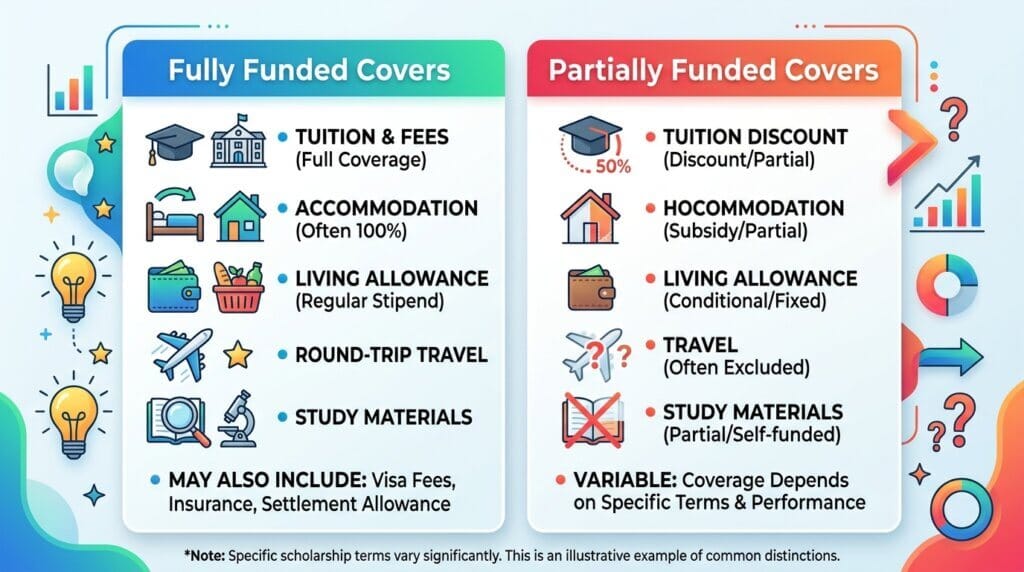
A big mistake students make is thinking every scholarship covers all their expenses.
What Does a Fully Funded Scholarship Cover?
Depending on the program, a fully funded scholarship may cover some combination of:
- Tuition fees
- Accommodation
- Monthly living allowance
- Airfare
- Health insurance
- Visa-related costs
- Research expenses
However, “fully funded” doesn’t always mean every possible personal expense is covered.
Always read the official funding conditions carefully.
What Does a Partially Funded Scholarship Cover?
A partial scholarship might cover:
- Part of your tuition
- A fixed tuition discount
- A one-time grant
- Accommodation
- A monthly allowance
- Travel expenses
For example, some scholarships may reduce tuition while leaving students responsible for living expenses.
Which Type Should You Search For?
That depends on your financial situation and the total cost of the program. Instead of just looking for “fully funded scholarships,” you might also want to consider partial scholarships combined with university funding, grants, your own savings, or other legitimate financial aid options.
How to Find Study Abroad Scholarships Using These Platforms
Finding a scholarship is only the first step. Here’s a practical process you can follow.
Step 1: Choose Your Study Level
Start with:
Secondary → Undergraduate → Master’s → PhD
Don’t apply for an opportunity simply because the scholarship amount looks attractive.
Step 2: Choose Your Preferred Country
Decide whether you are interested in:
- UK
- USA
- Canada
- Germany
- Australia
- Ireland
- New Zealand
- Other European countries
- Other international destinations
Step 3: Search by Subject
Search using your intended field.
For example:
- Engineering scholarships
- Computer science scholarships
- Medicine scholarships
- Business scholarships
- Education scholarships
- Law scholarships
- Social science scholarships
Step 4: Filter by Funding Type
Look for:
- Fully funded
- Partially funded
- Tuition waiver
- Grant
- Fellowship
- Research funding
Step 5: Check Eligibility
Before spending time on an application, confirm:
- Nationality
- Academic level
- Degree requirements
- Academic performance
- Age requirements
- Destination
- Course
- Language requirements
Step 6: Prepare Your Documents
Create a scholarship application folder containing your important documents.
Step 7: Apply Before the Deadline
Don’t wait until the final day.
Some scholarship applications require references, transcripts, essays, admission applications, or other documents that take time to obtain.
Step 8: Verify Everything on the Official Website
This is one of the most important steps.
Use scholarship platforms to discover opportunities, but always confirm the details on the official provider or university website.
Documents You May Need When Applying for Scholarships Abroad
Requirements differ between programs, but international scholarship applications commonly request documents such as:
- Academic certificates
- Academic transcripts
- CV or résumé
- Personal statement
- Statement of purpose
- Recommendation letters
- Proof of identity
- Passport information
- Proof of English-language proficiency where required
- Research proposal for some PhD applications
- University admission documents
Keep digital copies of your documents organized so you don’t have to search for them every time you discover a new scholarship.
How to Avoid Fake Study Abroad Scholarships
The growth of online scholarship information has also made it easier for students to encounter misleading or fraudulent offers.
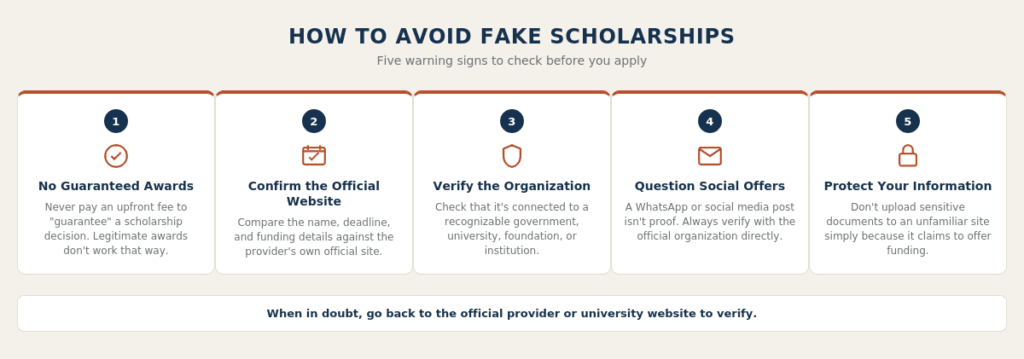
Never Pay Someone to Guarantee a Scholarship
Legitimate scholarship selection doesn’t mean someone can guarantee you’ll win.
Be especially wary of anyone who promises a guaranteed award in exchange for money.
Check the Official Scholarship Website
If you discover an opportunity through a third-party database, find the official provider.
Compare:
- Scholarship name
- Eligibility
- Deadline
- Funding details
- Application process
Verify the Organization
Check whether the scholarship is connected to a recognizable:
- Government
- University
- Foundation
- International organization
- Educational institution
Be Careful With Unofficial WhatsApp and Social Media Offers
A scholarship announcement shared on social media isn’t automatically fake, but you shouldn’t rely on social media as the definitive source for verification.
Always go back to the official organization.
Protect Your Personal Information
Don’t upload sensitive documents to an unfamiliar website simply because it claims to offer a scholarship.
The Commonwealth Scholarship Commission specifically advises applicants to use their official application systems and warns against using third-party websites that request personal information or supporting documents.
Common Mistakes Students Make When Searching for Scholarships
Applying Without Checking Eligibility
The biggest waste of time is applying for a scholarship you don’t actually qualify for.
Searching Only for “Fully Funded” Opportunities
Fully funded scholarships can be highly competitive. Include partial scholarships and university funding in your search.
Waiting Until the Deadline
Some applications require multiple documents and references.
Ignoring University Scholarships
Don’t assume every scholarship must appear on a large database.
Check the university’s official scholarship and financial-aid pages.
Using Outdated Information
A scholarship that existed last year may have different requirements—or may not be offered in the current cycle.
Copying the Same Personal Statement Everywhere
Your statement should address the specific scholarship and explain why your goals align with the opportunity.
Failing to Check the Official Source
A database can help you discover an opportunity, but the official provider should be your final verification point.
Frequently Asked Questions About Study Abroad Scholarship Platforms
What is the best platform to find study abroad scholarships?
There isn’t one platform that has every scholarship. A better strategy is to use several scholarship databases along with official university and government websites.
Which website can I use to find fully funded scholarships abroad?
You can search international scholarship databases, government scholarship programs, university funding pages, and major programs such as Erasmus Mundus and Commonwealth Scholarships. Always verify the current funding terms on the official website.
Can secondary school students get study abroad scholarships?
Yes, some international opportunities are designed for school pupils or pre-university students. However, eligibility varies significantly by program and destination.
Are there study abroad scholarships for undergraduate students?
Yes. Undergraduate students can find merit-based scholarships, university scholarships, government funding, grants, and other financial-aid opportunities.
Where can master’s students find international scholarships?
Master’s students can search platforms like scholarship databases, university funding pages, DAAD, Erasmus Mundus, Commonwealth Scholarships, and other government or institution-specific programs.
Are there scholarship platforms for PhD students?
Yes. PhD applicants can use scholarship databases, university research pages, government funding programs, and doctoral fellowship resources.
Can Nigerian students apply for study abroad scholarships?
Yes, Nigerian students can apply for many international scholarships when Nigeria is included among the eligible countries. However, eligibility is program-specific. For example, Nigeria is currently listed among eligible Commonwealth countries for relevant programs.
How do I know if a scholarship website is legitimate?
Verify the opportunity through the official university, government department, foundation, or scholarship provider. Don’t just rely on a social media post or a third-party listing.
When should I start applying for study abroad scholarships?
Start as early as possible. Some scholarships require admission applications, recommendation letters, transcripts, essays, language tests, or research proposals, so waiting until the deadline can make the process unnecessarily difficult.
Final Thoughts: Start Your Scholarship Search Early
Finding money to study abroad doesn’t have to mean randomly searching across hundreds of websites.
The better approach is to create a scholarship-search system.
“Start by identifying your study level, destination, course, nationality eligibility, and funding requirements. Then use several study abroad scholarship platforms to discover relevant opportunities.”
Most importantly, don’t stop at the scholarship database. Once you find an opportunity, visit the official scholarship provider or university website, verify the requirements, confirm the deadline, and understand exactly what the funding covers.
Whether you’re a secondary school student planning ahead, an undergraduate looking for tuition assistance, a master’s student searching for international funding, or a PhD applicant looking for research support, there are plenty of places to look.
The earlier you begin, the more opportunities you can investigate—and the more time you’ll have to prepare a strong application.