
Have you ever spent hours studying for an exam, closed your book feeling confident, and then struggled to remember what you read the next day?
You’re not alone.
The problem isn’t always how much you study. Often, it’s how you study.
Reading a chapter several times can make the material feel familiar without making it easy to recall later. A better approach is to actively retrieve information, review it over time, practice using it, and connect new ideas with what you already know.
This guide teaches you how to remember what you study, keep information in mind, and create a practical weekly study plan for school, university, and postgraduate studies.
Table of Contents
Why Do You Forget What You Study?
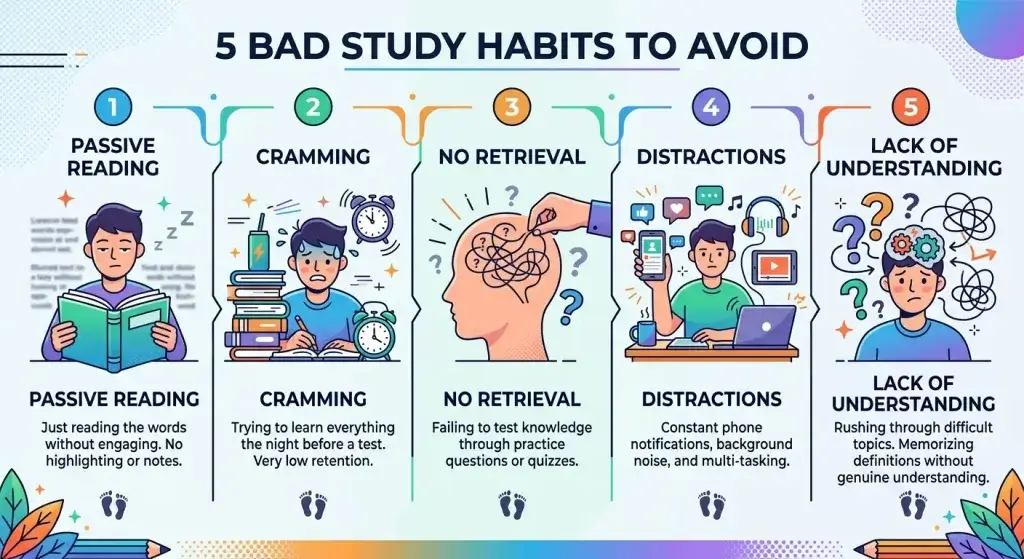
Understanding why forgetting happens can help you choose better study techniques.
Passive Reading
Reading and rereading can feel productive, but recognizing information on a page isn’t the same as recalling it independently.
If you can follow an explanation in your textbook but can’t explain it after closing the book, you need more active practice.
Cramming
Studying everything the night before an exam may help you remember some information temporarily, but spreading learning and revision across several days gives you more opportunities to retrieve it. Read more on why cramming failed
Not Practicing Retrieval
Many students spend most of their study time putting information into their minds and very little time trying to get it back out.
Regular retrieval is an important part of effective learning.
Distractions
Constantly switching between studying, notifications, social media, and other tasks makes it harder to maintain focused attention.
Lack of Understanding
Memorizing information without understanding how ideas fit together makes it harder to recall and apply later.
Before trying to memorize something, ask yourself:
What does this mean? Why does it matter? How does it work?
10 Science-Backed Techniques to Remember What You Study
1. Use Active Recall
Active recall means trying to retrieve information from memory instead of immediately looking at your notes.
After studying a topic, close your textbook and ask yourself:
- What are the main ideas?
- What definitions can I remember?
- Can I explain the topic without looking?
- What examples can I give?
- What questions could appear in an exam?
Then check your notes and correct anything you missed.
A simple method is:
Study → Close the book → Recall → Check → Correct
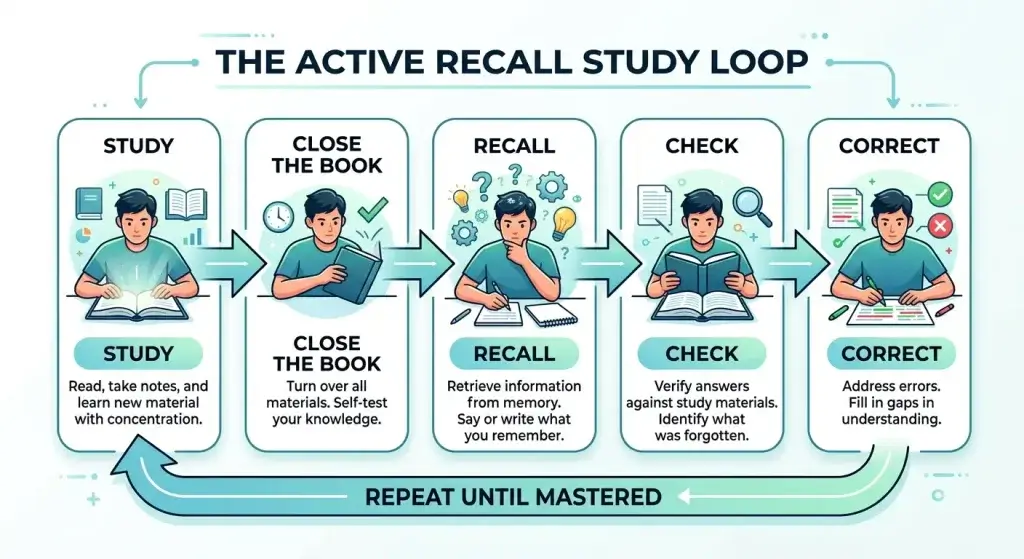
The goal isn’t perfect recall on the first attempt. The process shows you what you actually know and what still needs work.
2. Use Spaced Repetition
Instead of studying a topic once and leaving it until exam week, review it at increasing intervals.
For example:
- Day 1: Learn the topic
- Day 2: Quick recall
- Day 4: Practice questions
- Day 7: Review again
- Day 14: Test yourself
- Day 30: Final review
The reviews don’t always need to be long. A short retrieval session can help bring older material back into focus.
Spacing learning over time is a well-supported strategy backed by research on spaced education..
3. Practice With Questions
If you’re studying for an exam, spend time answering questions rather than only reading about the subject.
For mathematics and physics, solve problems without looking at worked solutions.
For biology, chemistry, history, economics, or law, answer questions from memory and explain your reasoning.
Practice testing is especially useful because it requires you to retrieve and apply information.
Research reviewed by the What Works Clearinghouse found that retrieval practice improved later test performance compared with several other study approaches, although the exact results depend on the learning situation.
4. Explain the Topic in Your Own Words
Try teaching the material to an imaginary student—or explain it aloud to yourself.
Cover:
- What the concept means.
- How it works.
- Why it matters.
- An example.
- Any important exceptions or limitations.
If you can’t explain part of it clearly, you’ve found a gap in your understanding.
For example, instead of memorizing a complicated definition word for word, explain the idea in ordinary language first. Then return to the formal definition and learn the terminology you need for your exam.
5. Break Large Topics Into Smaller Parts
A 50-page chapter can look intimidating.
Break it into manageable sections.
For example, instead of studying an entire chapter on waves at once:
- Meaning of waves
- Types of waves
- Wavelength
- Frequency
- Amplitude
- Wave speed
- Calculations
- Applications
- Practice questions
Study one section at a time and test yourself before moving on.
This makes large amounts of information easier to organize and review.
6. Connect New Information to What You Already Know
New ideas become easier to understand when they have somewhere to fit.
Ask:
- What does this remind me of?
- How does this connect to the previous topic?
- Can I think of a real-life example?
- What is similar or different about these two ideas?
For example, when learning a new economics concept, connect it to a situation you’ve already encountered or to a principle you learned earlier.
These connections can make abstract information easier to understand and retrieve.
7. Use Flashcards for the Right Information
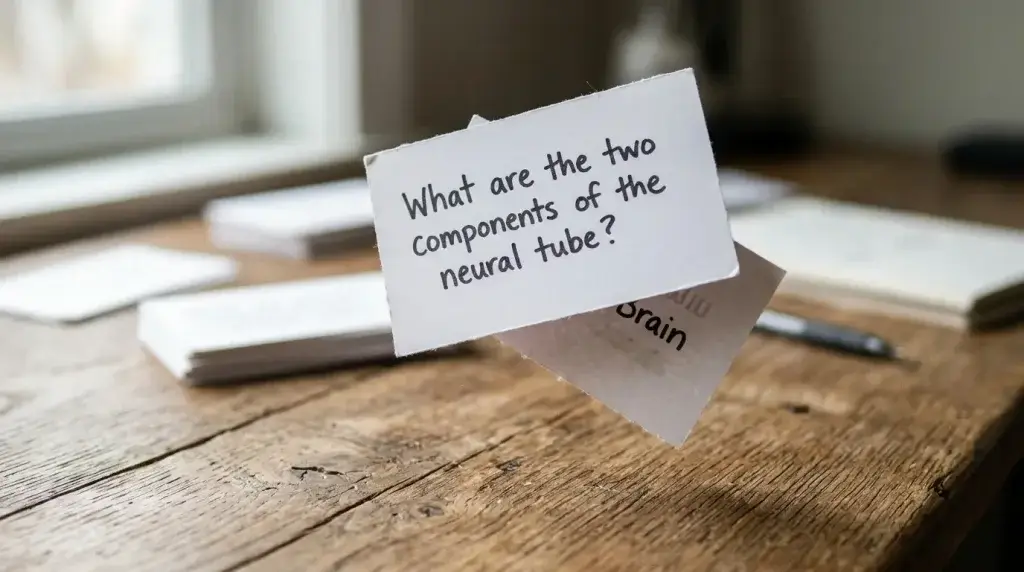
Flashcards are useful for information that benefits from repeated retrieval, such as:
- Definitions
- Formulas
- Vocabulary
- Key concepts
- Dates
- Terminology
Use them actively.
Question → Think → Answer → Check
Don’t turn every sentence in your textbook into a flashcard. Focus on information that you genuinely need to remember.
8. Take Notes That Support Learning
Good notes don’t need to contain everything your teacher or textbook says.
Instead, organize information around:
- Main ideas
- Definitions
- Examples
- Formulas
- Important relationships
- Questions
- Areas you don’t understand
For example, after studying photosynthesis, your notes might contain the definition, raw materials, products, word equation, factors affecting the process, and possible exam questions.
Your notes should help you think and retrieve, not simply give you more pages to reread.
9. Study in Focused Sessions

Long study sessions aren’t automatically productive.
Try working in focused blocks, such as:
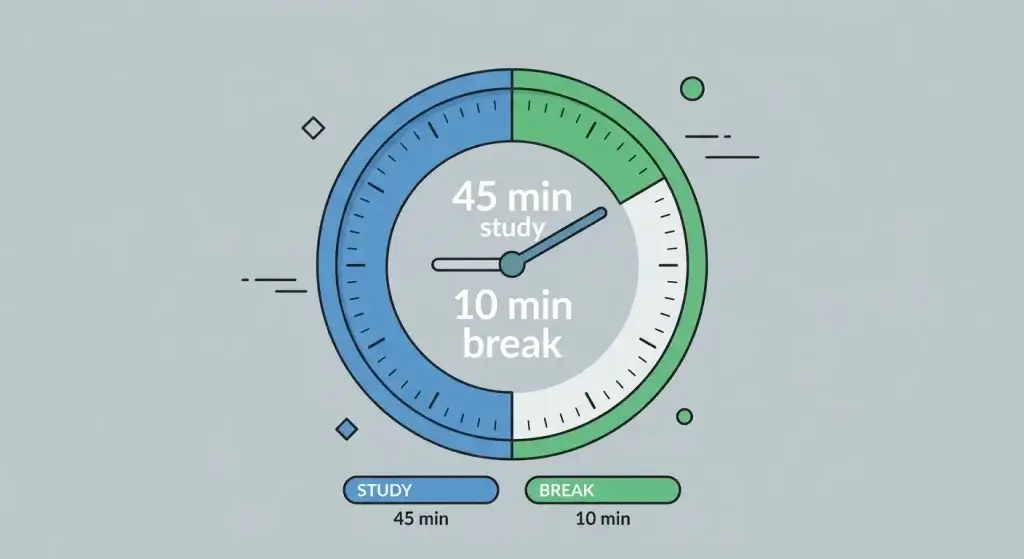
45 minutes studying + 10 minutes break
During the study period:
- Put unnecessary notifications aside.
- Focus on one subject or task.
- Keep only the materials you need nearby.
- Avoid switching between unrelated activities.
The exact timing can vary. Choose a schedule that allows you to concentrate consistently.
10. Review Your Weak Areas Regularly
Don’t give every topic the same amount of attention.
After a practice session, identify what you:
- Know confidently
- Partly understand
- Keep forgetting
- Cannot yet explain
Spend more time on the last two categories.
This prevents the common mistake of repeatedly reviewing topics you already know because they’re easier and more comfortable.
A Simple Study Routine That Combines the Techniques
You don’t need a complicated system.
Use this five-step process:
1. Learn
Study a manageable section and focus on understanding it.
2. Retrieve
Close your materials and write or say what you remember.
3. Check
Compare your answer with your notes and identify gaps.
4. Practice
Solve problems, answer questions, explain the concept, or apply it to an example.
5. Schedule a Review
Return to the topic after a day or two, then again later.
This creates a complete learning cycle without requiring you to constantly reread the same material.
A Practical Weekly Study Schedule
A good study technique only works if you actually use it.
Here’s a simple weekly schedule you can adapt around your classes, assignments, and other responsibilities.
Monday — Learn New Material
Study one or two important topics.
Focus on understanding the material, then spend a few minutes recalling the main points without your notes.
Main focus: New learning + active recall
Tuesday — Review and Continue
Begin with a short review of Monday’s material.
Try to recall the main ideas before checking your notes. Then move on to new material.
Main focus: Spaced repetition
Wednesday — Practice
Use practice questions, exercises, or problems.
For theory-based subjects, explain difficult concepts in your own words.
Main focus: Practice + self-explanation
Thursday — Work on Difficult Topics
Return to the areas you’ve struggled with.
Break complicated material into smaller sections and review the parts you keep forgetting.
Main focus: Weak areas + spaced review
Friday — Weekly Self-Test
Put your notes away and test yourself.
Use past questions, textbook questions, or questions you’ve created yourself.
Mark your answers and record the topics you need to revisit.
Main focus: Retrieval practice
Saturday — Deep Study and Application
Use this day for more demanding work, such as:
- Past examination papers
- Difficult calculations
- Essay writing
- Research reading
- Projects
- Problem-solving
- Unfinished topics
Main focus: Application
Sunday — Review and Plan
Keep Sunday relatively light.
Review the week’s important topics and identify what needs attention next week.
Then create your study priorities for the coming week.
Main focus: Weekly review + planning
Weekly Schedule at a Glance
| Day | Main Activity | Technique |
| Monday | Learn new material | Active recall |
| Tuesday | Review + new material | Spaced repetition |
| Wednesday | Practice questions | Retrieval + explanation |
| Thursday | Difficult topics | Spaced review |
| Friday | Self-test | Retrieval practice |
| Saturday | Deep study | Application |
| Sunday | Weekly review | Retrieval + planning |
You don’t have to follow this schedule perfectly. If you have school, work, family responsibilities, or other commitments, adjust the duration.
Consistency matters more than having a perfect timetable.
The 3-2-1 Weekly Review
At the end of the week, ask yourself three simple questions.
3 Things I Learned
Write down three important ideas you learned.
2 Things I Still Find Difficult
Identify two areas that need more work.
1 Question I Still Can’t Answer
Write down one question you’re still unsure about.
Carry those weak areas into the following week’s study plan.
How to Remember What You Study for Exams
As an exam approaches, don’t abandon your normal learning strategy and suddenly switch to cramming.
Instead, try to make your revision more focused.
Start With the Syllabus
List the topics you need to know and divide them into manageable sections.
Identify Your Weak Areas
Use a simple system:
- Strong: I can explain it without notes.
- Okay: I understand it but forget some details.
- Weak: I struggle to explain or apply it.
Focus most of your energy on your weak areas.
Use Past Questions
Try to answer past questions before looking at the solutions.
This shows whether you can actually use the knowledge under exam conditions.
Review Your Mistakes
Keep a short list of:
- Questions you got wrong
- Concepts you misunderstood
- Formulas you forgot
- Common mistakes
- Topics that require another review
This list becomes a useful revision tool as the exam gets closer.
How to Remember What You Study at Different Academic Levels
Your study strategy should match the type of work you’re doing.
Secondary School Students
Students preparing for WAEC, NECO, GCSE, Cambridge IGCSE, British or American National Systems, International Baccalaureate (IB), and similar examinations can benefit from:
- Active recall
- Flashcards
- Practice questions
- Past papers
- Spaced repetition
- Formula practice
- Explaining concepts
For mathematics and physics, prioritize solving problems. For theory-heavy subjects, practice recalling and explaining information without your textbook.
University Students
University courses often require more independent learning.
Focus on:
- Understanding concepts
- Connecting topics
- Active recall
- Practice questions
- Spaced repetition
- Effective notes
- Applying knowledge to unfamiliar problems
Don’t wait until exam week to start retrieval practice.
Master’s and PhD Students
Postgraduate study usually means less memorizing isolated facts and more understanding how ideas connect.
When reading research, make notes about:
- Research question
- Main argument
- Method
- Findings
- Limitations
- Your interpretation
- Connections with other research
Instead of asking only, “What does this paper say?” also ask:
“How does this fit with what I already know?”
That question can make academic reading much more meaningful.
Common Study Mistakes to Avoid
Rereading Without Testing Yourself
Familiarity isn’t the same as recall.
Highlighting Too Much
If almost everything is highlighted, then very little is actually prioritized.
Studying Only Before Exams
Leaving everything until the last minute makes it harder to build a steady review cycle.
Avoiding Practice Questions
Understanding an explanation doesn’t guarantee that you can solve a new problem.
Spending Too Much Time on Easy Topics
Reviewing what you already know feels productive, but difficult areas usually deserve more attention.
Copying Notes Word for Word
Your notes should help you understand and retrieve information, not reproduce your textbook.
Studying With Constant Distractions
Protect your focused study time by reducing unnecessary interruptions.
How Long Does It Take to Remember What You Study?
There’s no set number of hours that guarantees you’ll remember something.
It depends on:
- The difficulty of the material
- Your previous knowledge
- How well you understand the topic
- How actively you study
- How often you retrieve it
- How much material you’re learning
Instead of asking, “How many hours should I study this?”, ask:
“Can I explain and use this information without looking at my notes?”
That gives you a more useful measure of learning.
What Is the Best Way to Remember What You Read?
Don’t rely on reading alone.
Use this sequence:
Read → Understand → Close the book → Recall → Check → Practice → Review later
For a five-page section, for example:
- Read it carefully.
- Identify the main ideas.
- Close the book.
- Explain what you remember.
- Check what you missed.
- Answer questions about the topic.
- Review it again later.
The goal is to turn reading into active learning.
Frequently Asked Questions
How can I remember what I study without forgetting?
Use active recall and spaced repetition. Test yourself after studying and revisit the material over several days instead of relying on one long study session.
Why do I forget what I study so quickly?
Common reasons include passive reading, cramming, insufficient retrieval practice, distractions, and not fully understanding the material.
Is rereading a good way to study?
Rereading can help you get a basic understanding, but it shouldn’t be your only strategy. Try mixing it up with retrieval practice and asking yourself questions.
Are flashcards good for studying?
Yes, particularly for definitions, formulas, terminology, vocabulary, and other information that benefits from repeated recall.
How often should I review what I study?
There is no single schedule that works for everyone, but reviewing material across multiple days is generally more useful than studying it once and waiting until the exam.
How can I remember what I study for exams?
Combine active recall, spaced review, practice questions, past papers, and focused study sessions. Pay particular attention to topics you repeatedly get wrong.
Final Thoughts
Remembering what you study isn’t about having a perfect memory or spending endless hours with your books.
It’s about what you do with the information after you read it.
Close the book and recall it.
Answer questions.
Explain difficult ideas.
Break large topics into manageable pieces.
Connect new knowledge with what you already understand.
Then come back to the material later.
Most importantly, build these techniques into a routine you can actually maintain.
You don’t have to completely change your study habits all at once. Just start with one topic. Read it, close the book, try to recall what you learned, check for any mistakes, and then review it again later.
Then repeat the process tomorrow.
Over time, effective study techniques stop feeling like extra work and become the way you naturally learn.